Works together
Outpost is built to sit at the center of a small suite of IndieWeb plugins: Post Kinds for IndieWeb in Block Themes, Post Formats for Block Themes, and Link Extension for XFN. Outpost detects companions at runtime — activate one and the composer grows the matching capability, deactivate it and the composer quietly narrows. None of them is required.
The screenshots on this page come from a demo site running the whole suite with a styled block theme (plus the IndieAuth, Micropub, and Webmention building blocks), so they show a real site’s look rather than a default install.
The full stack on one site
Section titled “The full stack on one site”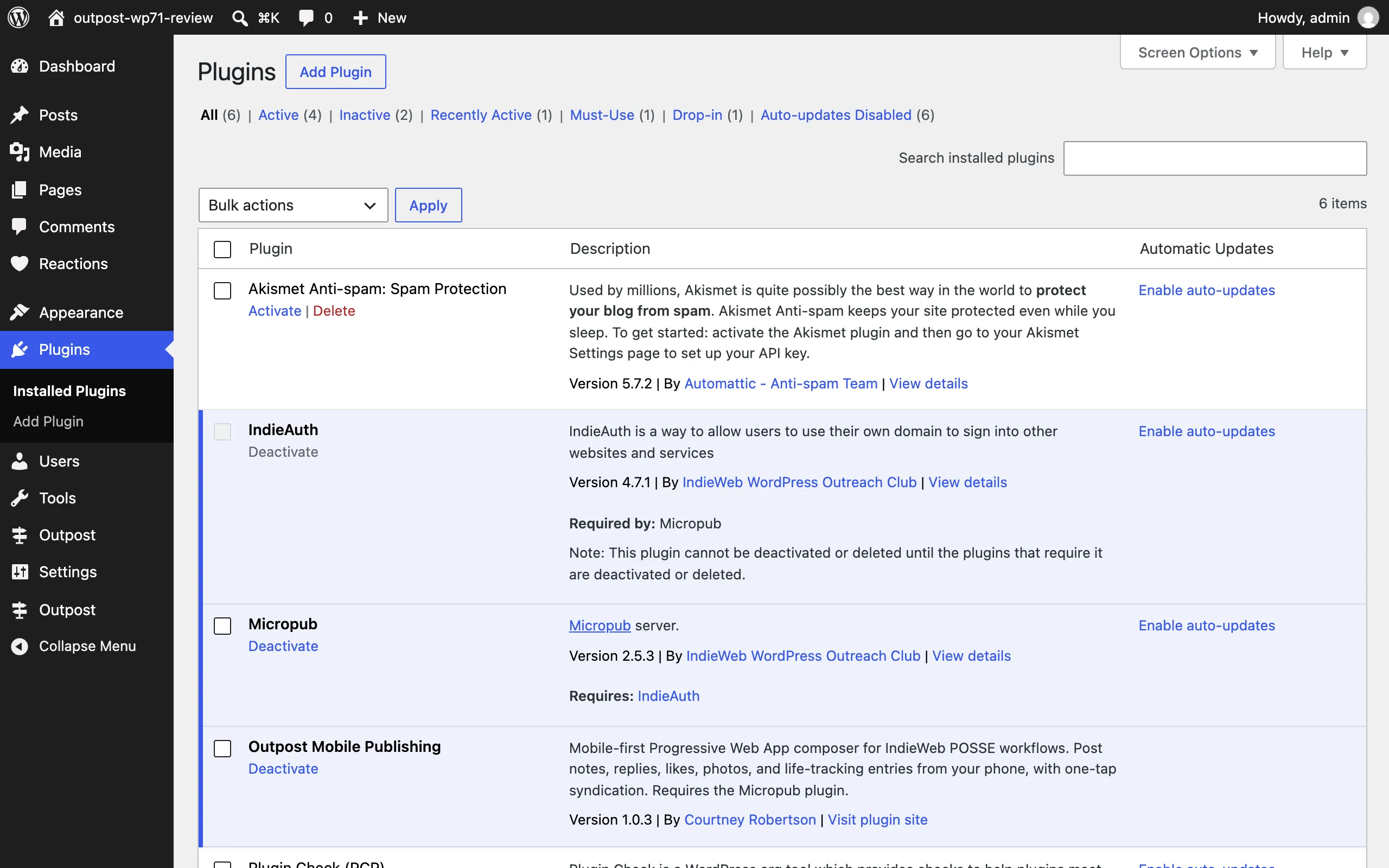
The suite plus its building blocks: IndieAuth signs you in, Micropub receives what the composer publishes, Webmention handles responses, and the three companion plugins shape how posts are written and displayed.
Compose on your phone
Section titled “Compose on your phone”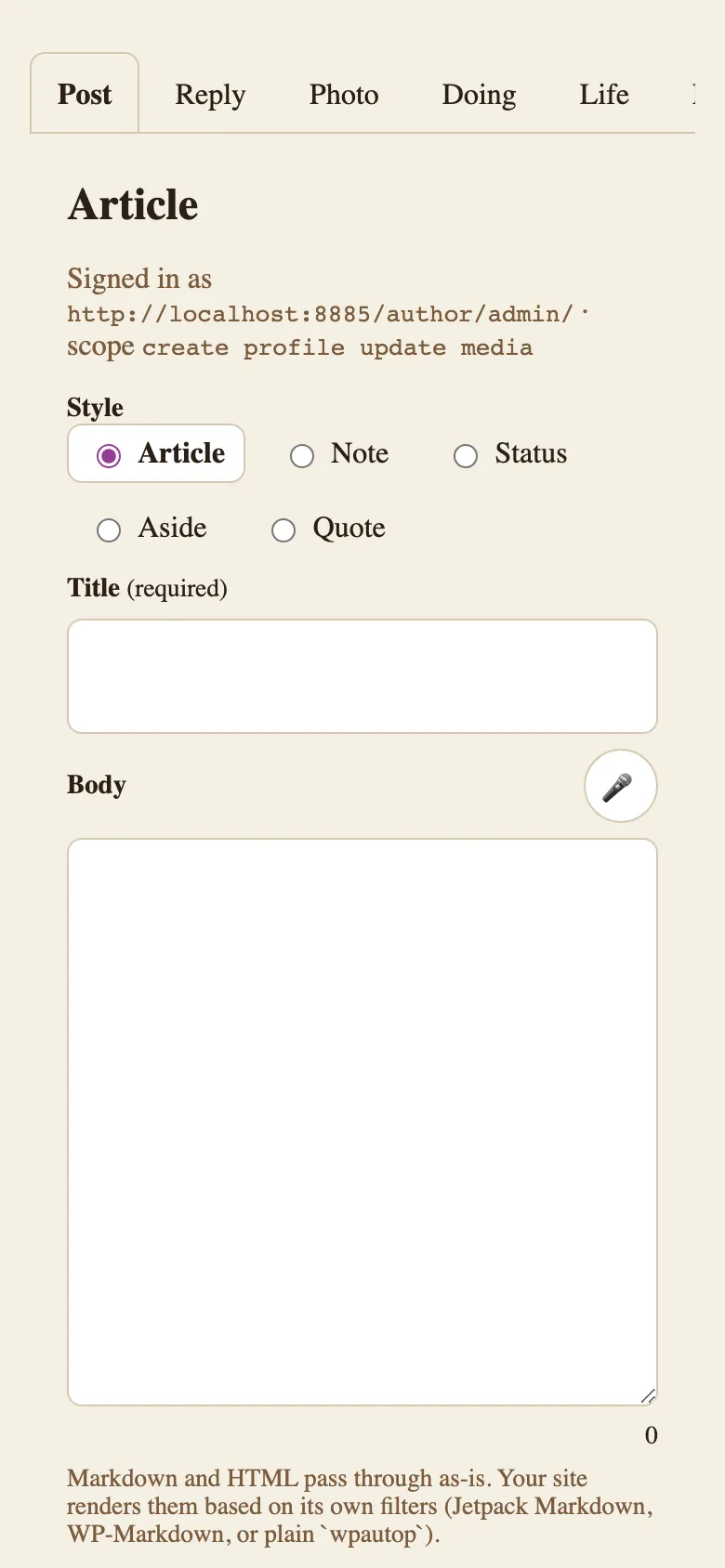
The composer signed in against the demo site over IndieAuth. The tab row is always the full set; with Post Kinds active, every entry — from a listen log to a craft, event, or review — lands classified as its proper kind, and with Post Formats active, the style you pick flows into format inference once the post lands.
What arrives on your site
Section titled “What arrives on your site”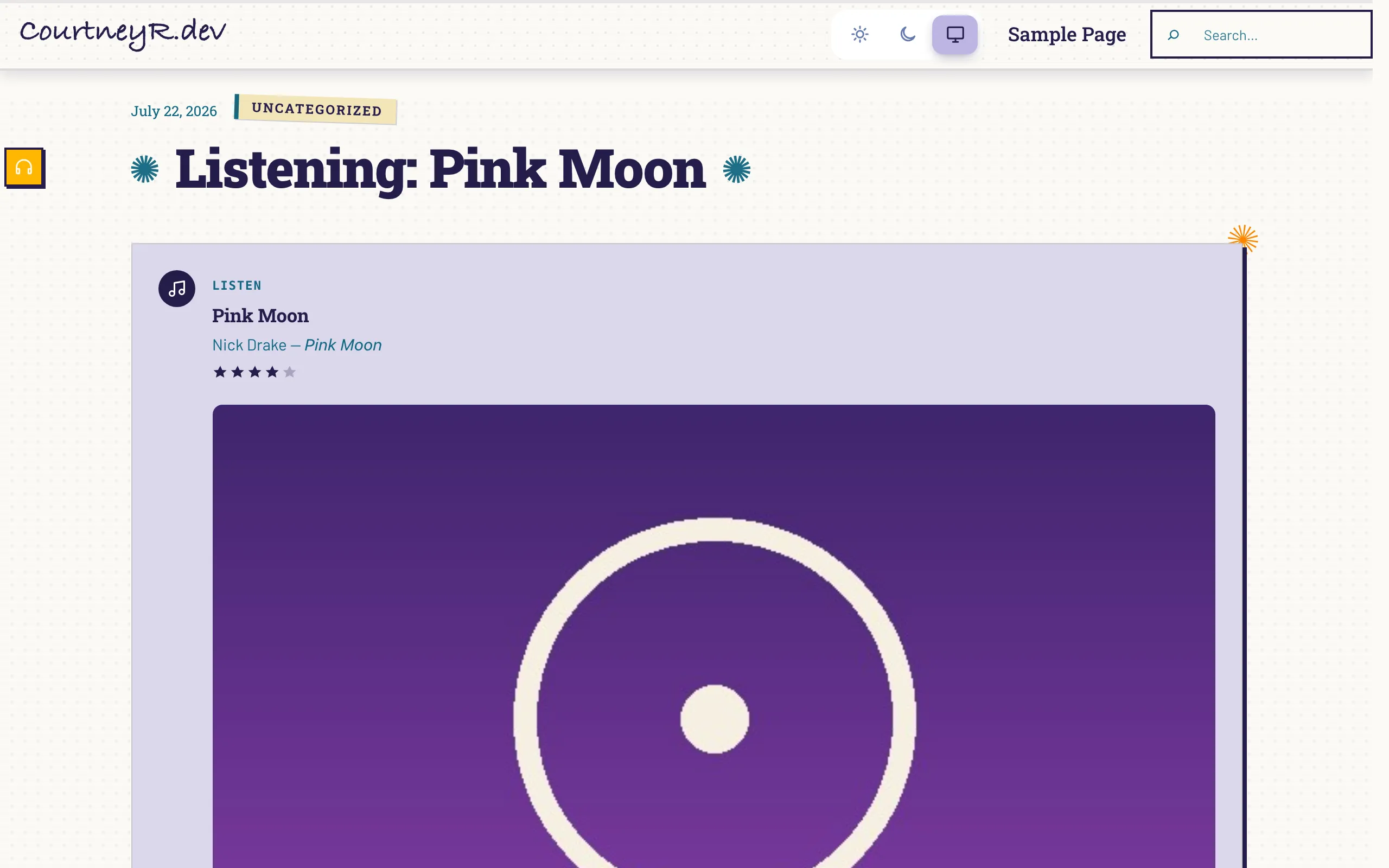
A listen logged from the composer renders as a Post Kinds Listen Card in the theme’s own styling — cover art, rating, and microformats included. With Webmention active the post also grows a likes-and-reposts section and a reply form.
Formats and kinds stay in step
Section titled “Formats and kinds stay in step”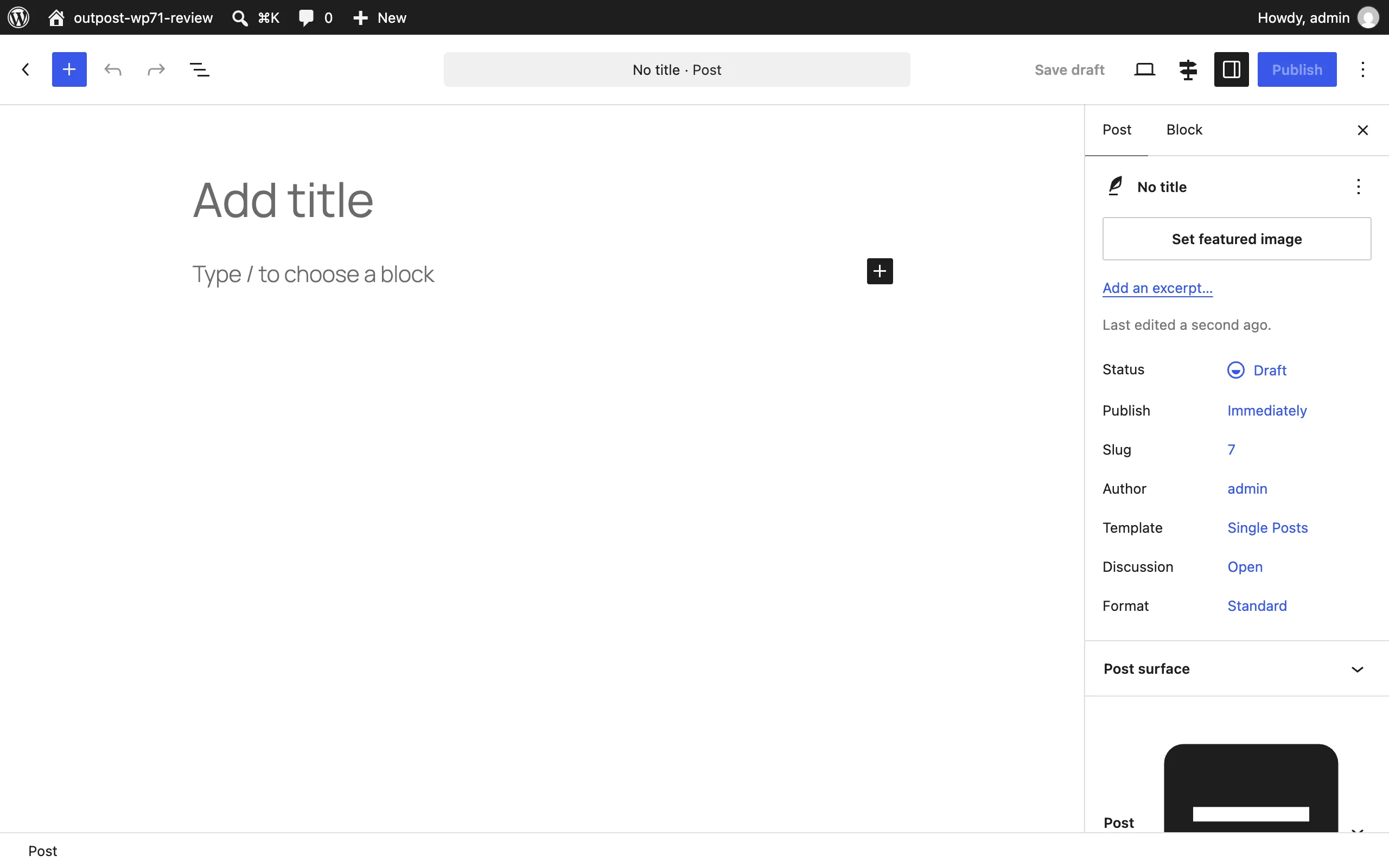
Editing on the desktop side, Post Formats’ selection modal shows the kind mapping Post Kinds registers — Standard → Article, Aside → Note, Audio → Listen. Posts published from Outpost pass through the same mapping, so a note from your phone and a note from the editor end up shaped identically.
What each plugin adds
Section titled “What each plugin adds”- Outpost — this plugin: the phone-friendly composer, syndication chips, offline queue, and share-sheet capture.
- Post Kinds for IndieWeb — card blocks and microformats for the kind-shaped posts the composer creates. It also reads standard.site records behind the pages you cite (a few seconds after saving, no account needed) and, with ATmosphere, decides which kinds publish as standard.site documents and how untitled ones are titled — see How Outpost shapes a post.
- Post Formats for Block Themes — format patterns, badges, and templates; formats map onto kinds automatically.
- Link Extension for XFN — relationship attributes on links in any post, including reply targets.
- RSS Chat Routing — rss.chat is a chat network built on RSS: your site publishes a post to it, people reply there, and the replies come back to your post as comments. Matthias Pfefferle’s RSS Chat plugin does the sending; on its own it sends only posts carrying the core chat post format. RSS Chat Routing chooses which posts go instead — by default post format, default Post Kind, or per post — and brings replies home as verified Webmentions. With it active, the composer’s More panel adds the same per-post choice, Send to rss.chat (Site default, Include in RSS Chat, or Exclude from RSS Chat), sent as
mp-rss-chat-routing, so you can opt a post in or out from the app without opening the editor. - ATmosphere — ATmosphere publishes each post to the AT Protocol: a Bluesky post or thread linking back to your site, plus the full article stored on your AT Protocol account as a standard.site document (the
site.standard.*lexicons). Bluesky replies, likes, and reposts come back as comments. Outpost adds no chip for it — posts from the composer cross-post like any other published post. Opt a post out from the block editor sidebar, and leave the Bluesky via Bridgy chip off when ATmosphere is connected so the same post doesn’t reach Bluesky twice. With Post Kinds active, Post Kinds decides which kinds publish by default and derives titles for untitled ones, so Outpost’s posts follow the standard.site rules described in How Outpost shapes a post.